

Industrial jobs frequently need materials to satisfy certain mechanical, thermal, chemical or electrical requirements. It can then be a tricky decision to make between specialty metals and other advanced materials. Often the cheapest material does not equal the most practical, and the material that performs best may not be needed for every application. When comparing, it’s useful to look at the full operational environment, manufacturing process, design of the components themselves, the lifespan of the project and the overall requirements for the project.
Start With the Application Requirements
The application should lead material comparison from the start of the application itself. When designing equipment, engineers have to determine what it has to endure in normal use.
The decision can be affected by temperature, mechanical loading, exposure to corrosion, electrical conductivity, wear, weight and dimensional stability.
Having a good set of requirements to narrow down to the materials that cannot perform to the desired requirements makes it easier to compare secondary requirements like cost or availability.
Compare Mechanical Performance
When looking at materials for industrial parts, strength and durability can also be crucial factors. But, depending on application, there are different mixes of mechanical properties needed.
There may be components that require high tensile strength or components where hardness, toughness, fatigue resistance or repeated load resistance is more important.
In Advanced engineering materials comparison, consider the material property that is required for the product use, instead of general information about material performance.
Consider Temperature Requirements
The performance of a material may be greatly influenced by temperature. Some applications require continuous exposure to elevated temperatures, and others are subject to occasional high-temperature exposures or to repeated thermal cycling.
A material should then be tested over the range of temperatures to which it will be subjected in use, not just the maximum operating temperature.
When the component is required to be dimensionally stable or when it is required to be used with a different material with different thermal expansion, a consideration should be given to thermal expansion as well.
Examine Chemical and Environmental Exposure
Material suitability can be highly affected by the working environment. Materials can be adversely affected by moisture, acids, alkalis, salts, industrial chemicals, and the atmosphere.
Excellent mechanical properties may not be applicable if the material will not last long in the environment in which it is going to be used.
Prior to finalizing a material, businesses should consider the most probable exposure circumstances and the material’s corrosion, oxidation, chemical resistance, and protection.
Evaluate Specialty Metal Options
Specialty metals offer desirable combinations of properties that can be of value in special applications. They can be considered in applications where conventional metals do not offer the necessary temperature resistance, corrosion protection, or strength, conductivity, or other properties.
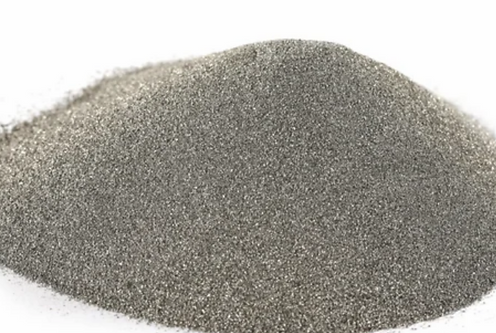
Other types of specialty metal powders might also be applicable if the project involves powder-based manufacturing or other processes where material form is important.
The material form should be chosen based on the manufacturing process, not as a stand-alone purchasing decision.
Think About Manufacturing Compatibility
A material needs to be usable in the manufacturing of the needed component. Each of the processes, such as machining, forming, cutting, joining, sintering, coating, or additive manufacturing, can impose different requirements on the material chosen.
Materials may have outstanding performance characteristics, but necessitate special processing techniques.
Engineers should therefore not only consider the material properties, but also processing requirements, tooling requirements, production capabilities, and the complexity of the manufacture.
Consider Component Geometry
A component’s shape and size may affect the choice of material. Thin sections, complex geometries, close tolerances, and large dimensions can lead to other manufacturing and performance needs.
What may be best for a simple part might not be as well suited for a very intricate part.
An early review of the component geometry can help engineering to select materials that will give the desired properties and also be viable in manufacture.
Compare Total Project Cost
Material cost is just one of the costs of the project. Additional costs for processing, machining, finishing, inspection, transportation, waste, maintenance, and replacement can also impact the final cost.
Materials with a higher cost of purchase may be more value if they can increase service life or decrease manufacturing complications.
So the most economical option should be chosen on the basis of the total life cycle and production needs and should not only be considered in terms of unit price.
Review Availability and Supply Consistency
Availability of materials may become significant once a custom project goes into normal production. Difficult sourcing material can cause delays even if the technical properties are considered to be appropriate.
Factors such as the anticipated use, volume, delivery times, need for documentation, and availability into the future need to be taken into account.
Repeat production can also be easier if a consistent supply is provided, enabling engineers to work on the assumption that the characteristics of the materials are the same each time they are ordered.
Conclusion
When weighing specialty metals versus advanced materials, it is important to have a well-rounded perspective of the product’s performance, the manufacture process, environmental requirements, cost, geometry, and supply requirements. There is no material that is best suited to every custom project, so the starting point for selecting an appropriate material is a set of application requirements. A full life cycle can be used to help businesses make decisions on materials that are not solely based on the price of the material or individual ratings. For companies interested in specific material solutions, they can visit regmetals.com to view the materials on offer and discuss the project’s sourcing requirements. A clear review helps you choose top stock, and brings strong, lasting build results.
