

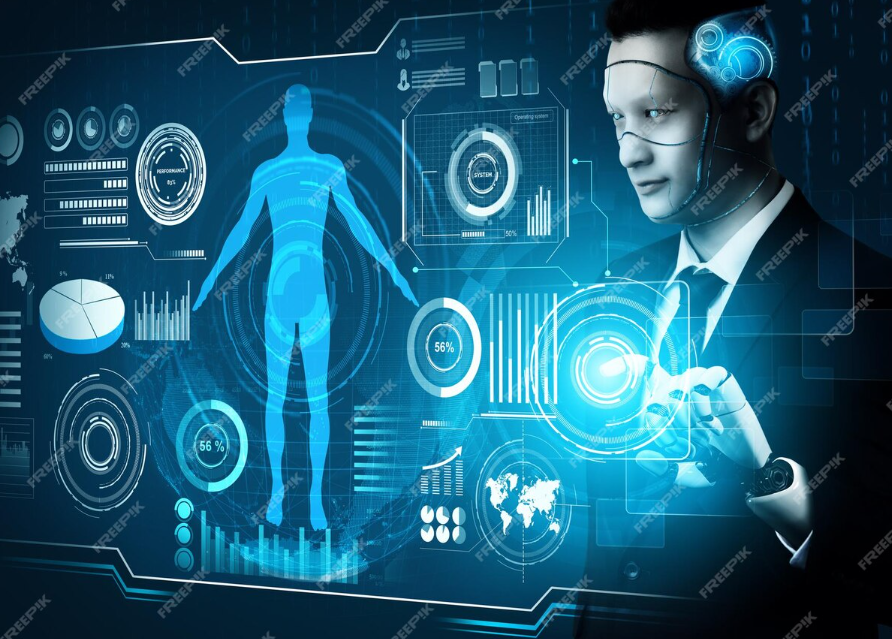
The convergence of biology and artificial intelligence (AI) is not a distant future—it’s already unfolding in the laboratories, clinics, and tech companies of today. Bio-AI interfaces, a groundbreaking frontier in science and technology, are beginning to transform how humans interact with machines, how diseases are diagnosed, and even how emotions are understood. These interfaces, which enable AI systems to receive and interpret biological signals from the human body, represent a fusion of the organic and the digital.
In this article, we explore what happens when AI understands your body. From neurotechnology and prosthetics to emotion recognition and real-time health monitoring, we delve into the practical applications, underlying technology, ethical considerations, and educational pathways preparing the next generation of experts in this emerging field.
Understanding Bio-AI Interfaces
A bio-AI interface is any system that facilitates the flow of data between a human biological process and an AI model. This may include brain-computer interfaces (BCIs), biometric sensors, muscle signal decoders, and more. These systems enable AI to “read” and sometimes even predict bodily functions, movements, or states of mind.
For example, a brainwave-detecting headband may collect EEG (electroencephalogram) data and send it to an AI model trained to detect stress or focus levels. Similarly, wearables embedded with biosensors can track heart rate, oxygen saturation, or skin temperature, offering real-time insights into physical well-being.
The key to the success of such systems lies in their ability to actively learn and adapt. Machine learning algorithms can process large streams of noisy biological data, extract meaningful patterns, and use this knowledge to provide feedback, make decisions, or even control external devices.
Applications of Bio-AI Technology
The practical applications of bio-AI interfaces are vast and rapidly expanding:
- Healthcare Monitoring: AI-powered wearables are helping patients and doctors monitor chronic conditions, predict medical emergencies, and improve treatment adherence. For instance, an AI system might alert a diabetic patient before their glucose levels drop dangerously low.
- Neuroprosthetics: In prosthetic limb technology, AI algorithms decode neural signals or muscle contractions, allowing users to control robotic arms or legs with near-natural movement.
- Mental Health: By analysing voice tone, facial expressions, and physiological signals, AI can identify signs of depression, anxiety, or burnout—often earlier than traditional diagnostic methods.
- Human Augmentation: BCIs allow users to control devices like drones or computers using their thoughts. This opens possibilities in gaming, defence, and workplace productivity.
- Rehabilitation: AI systems can personalise recovery protocols for stroke or injury patients based on real-time physiological feedback.
The common thread among all these applications is AI’s ability to understand, predict, and respond to human biological data in ways that enhance quality of life and broaden human potential.
Building Expertise in Bio-AI
Given the interdisciplinary nature of bio-AI work, professionals must possess knowledge of biology, data science, signal processing, and machine learning. Educational programmes are beginning to evolve to meet this demand.
One effective pathway is enrolling in an AI course in Bangalore, where learners gain exposure to real-world applications and cutting-edge research. With Bangalore’s strong ecosystem of tech startups, research institutes, and healthcare innovators, such a course offers a unique opportunity to learn by doing.
Course modules often include biomedical signal analysis, human-computer interaction, and AI ethics—providing a robust foundation for future professionals in the field.
Key Technologies Behind the Interface
To create effective bio-AI interfaces, several technologies work in harmony:
- Sensors: These capture signals such as brainwaves, heartbeats, or muscle movements. Sensors must be non-invasive, accurate, and capable of long-term use.
- Signal Processing: Raw biological signals are often noisy. Sophisticated filters and algorithms clean this data for AI analysis.
- Machine Learning Models: Once processed, the data is fed into models—often using neural networks—that learn to associate certain patterns with specific commands, health conditions, or emotional states.
- Real-Time Feedback Mechanisms: These ensure the system responds instantly, such as adjusting a pacemaker’s rhythm or alerting the user of fatigue.
Together, these components form systems that don’t just understand human biology—they interact with it dynamically.
The Rise of Personalised Health and AI
Bio-AI interfaces are also central to the movement toward personalised health. Traditional healthcare often treats patients based on general protocols. AI systems, however, can tailor interventions based on an individual’s unique biological patterns and lifestyle habits.
Imagine a fitness tracker that doesn’t just count steps but recommends exercises, meal plans, or relaxation techniques tailored to your body’s signals. Or a smartwatch that can detect early signs of infection or cardiac stress before symptoms appear.
Such innovations are being embraced in smart hospitals, remote patient care, and even consumer tech. They exemplify the shift from reactive to proactive healthcare.
Challenges and Ethical Considerations
Despite their potential, bio-AI interfaces raise important ethical and technical challenges:
- Privacy: Biological data is deeply personal. Ensuring data security and also obtaining informed consent are paramount.
- Bias and Accessibility: If AI systems are trained on non-representative data, they may perform poorly or unfairly for certain demographics.
- Dependence and Autonomy: As AI becomes more integrated into bodily functions, concerns about overdependence and loss of agency arise.
- Regulation: Medical devices involving AI must comply with stringent regulatory standards. The pace of innovation often outpaces legal frameworks.
These challenges highlight the importance of designing systems that are inclusive, transparent, and ethically aligned with societal values.
Institutional Response and Innovation
Academic institutions are increasingly integrating bio-AI topics into their curricula. An artificial intelligence course in Bangalore, for example, might include practical labs where students work on brainwave-driven applications or AI-assisted diagnostics. By exposing students to the societal impact of their work, these programmes foster not only technical proficiency but also a sense of responsibility.
Collaborations between universities, healthcare providers, and tech companies are also facilitating innovation. Hackathons, internships, and research grants are enabling students to contribute to real-world bio-AI solutions even before graduation.
Looking to the Future
As bio-AI interfaces mature, we can expect a host of futuristic yet plausible developments:
- Emotionally Aware Devices: Smart assistants that respond not just to commands but to your mood and energy levels.
- Cognitive Enhancement Tools: Headsets that enhance focus or memory retention by modulating neural activity.
- Bio-Adaptive Environments: Homes and offices that adjust lighting, temperature, and noise levels in response to occupants’ physiological states.
These innovations will reshape how we work, learn, heal, and interact. The challenge will be ensuring they do so in a way that enhances human dignity and autonomy.
Conclusion
Bio-AI interfaces mark the beginning of a new chapter in the human-machine relationship—one where the machine doesn’t just compute, but feels and responds. By tapping into our biological signals, AI is opening doors to personalised healthcare, human augmentation, and emotional intelligence in technology.
However, the journey forward must be guided by ethics, inclusivity, and robust education. For those inspired by this intersection of biology and artificial intelligence (AI), now is the perfect time to get involved. Whether through academic study, research, or innovation, the field offers exciting opportunities to shape the future.
In a world where machines can understand not just what you say but how your body responds, the line between biology and technology blurs. And in that blur lies the promise of a more responsive, empathetic, and intelligent future.
For more details visit us:
Name: ExcelR – Data Science, Generative AI, Artificial Intelligence Course in Bangalore
Address: Unit No. T-2 4th Floor, Raja Ikon Sy, No.89/1 Munnekolala, Village, Marathahalli – Sarjapur Outer Ring Rd, above Yes Bank, Marathahalli, Bengaluru, Karnataka 560037
Phone: 087929 28623
Email: [email protected]
