

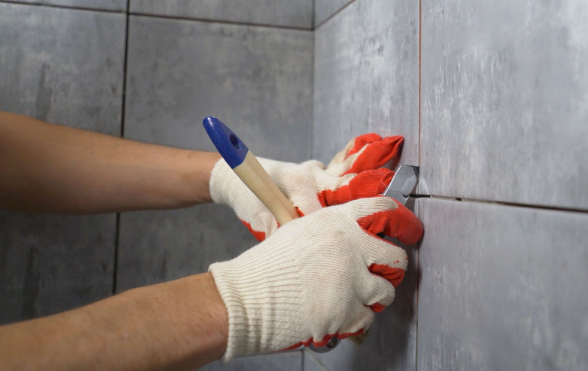
Behind every sturdy building is a careful selection of high-quality construction materials in Singapore, and at the heart of it all is grout. Whether it’s non-shrink grout, cementitious grout, or non-shrink cement grout, these materials ensure durability, prevent cracks, and provide structural stability. In construction, choosing the right building materials supplier can make or break a project. So, how do these materials work? How are they made? And why do they matter more than you think?
The Chemistry Behind Non-Shrink Grout
Grout may look like a simple grey paste, but its chemical composition is anything but ordinary. Non-shrink grout is designed to expand slightly as it sets, rather than contract like traditional grouts. This unique property prevents gaps, ensuring a snug fit in areas that require extreme precision, such as under heavy machinery or in bridge columns.
Cementitious grout consists of cement, fine aggregates, and additives that enhance its strength and flexibility. When mixed with water, a chemical reaction transforms the grout into a rock-solid mass. Non-shrink cement grout combines the best of both worlds, offering superior adhesion while resisting shrinkage, a crucial factor in construction projects that demand both durability and precision.
But the secret to high-quality grout isn’t just in the raw materials, it’s also in the curing process. Grout must be mixed at the right consistency, applied under controlled conditions, and given adequate time to set. These factors determine whether a structure remains strong for decades or crumbles within a few years.
Where Non-Shrink Grout Works Its Magic
The applications of non-shrink grout extend far beyond construction sites. One of the most common uses is in structural repairs, where it is injected into cracks to restore the strength of ageing buildings. Engineers also rely on non-shrink cement grout for anchoring heavy machinery, ensuring that industrial equipment remains firmly in place despite constant vibrations.
In infrastructure projects, cementitious grout plays a key role in securing bridge bearings, reinforcing underground tunnels, and even sealing underwater structures. The ability of grout to bond tightly without shrinking makes it an essential component in areas where even the smallest gaps can lead to structural failure.
Singapore’s construction industry heavily depends on these materials to support its rapidly expanding skyline. From Marina Bay Sands to the ever-evolving MRT system, grout quietly does its job, ensuring that Singapore’s urban landscape remains safe, stable, and efficient.
When Grout Saves the Day
Imagine a project deadline looming over a construction site. A team of engineers discovers that the base plates for a high-rise building’s support beams have developed tiny gaps due to uneven surfaces. Without a quick fix, the entire project could be delayed, costing millions of dollars. This is where non-shrink grout becomes a game-changer.
The construction team applies the grout, allowing it to flow into the gaps and create a seamless, high-strength connection. The problem is solved, and the project continues on schedule.
In another scenario, a contractor working on underground tunnels for an MRT extension realises that minor leaks are seeping through concrete joints. Instead of costly reconstructions, they use cementitious grout to fill the voids, reinforcing the structure and preventing further water ingress.
When the Wrong Grout Creates Disaster
While non-shrink cement grout is a reliable choice, not all grout is created equal. Contractors who cut corners using cheaper, low-quality grout often face serious consequences. One of the most common problems is shrinkage, which leads to small but dangerous voids in construction elements. Over time, these voids weaken the structure, causing cracks and potential failures.
Another frequent issue is improper mixing. If grout isn’t blended at the correct ratio or isn’t given the right curing conditions, it can become brittle, reducing its overall effectiveness. This has led to major accidents, where poorly mixed grout caused bridge supports to fail, resulting in costly reconstructions.
By working with a trusted building materials supplier, project managers can ensure they use construction materials in Singapore that meet the highest safety and quality standards. With advancements in grout technology, modern formulations are now designed to self-heal tiny cracks, further enhancing the resilience of buildings and infrastructure.
Conclusion
The importance of grout in construction cannot be overstated. Non-shrink grout, cementitious grout, and non-shrink cement grout play a critical role in ensuring structural integrity. While grout may not be the most glamorous material on a construction site, it is undoubtedly one of the most essential. As Singapore continues to expand its infrastructure, choosing the right building materials supplier will become even more crucial. Quality materials prevent costly repairs and delays and ensure cities remain safe for generations.
The next time you walk past a massive skyscraper or drive over a well-built bridge, remember—thanks to the humble yet powerful grout that holds everything together. Explore Ardex – Quicseal Singapore today.
